We ended up talking the other week in a comment thread about what makes a good lead -- [Update, 3/13/13: and this works tangentially into the conversation about whether those designations should happen at all] but the other side of that seems to rarely be discussed. What makes for a good contra follow? (Or, to phrase it differently, what can a dancer do while dancing in the role that ends up on the right in a swing -- however you choose to designate it -- that will improve the experience for all?) 

To my mind it depends a bit on one's partner and the ability to respond to their leads, but in some ways that's kind of the point. I remember something North Carolina dancer (and electrotrad maven) Eileen Thorsos said on the matter when I interviewed her in 2011 that I remember really liking:  "....There's a lot of following -- understanding what's going on with your partner -- that's built into leading."

Do you agree? Is there something else that makes for a good follower/lady/right-hand-role in contra?  For those who answer, I'm also curious -- which role do you usually dance, and do you dance switch (i.e., dancing where you and your partner agree to trade roles through the iterations of the dance)?

 
 
Picture
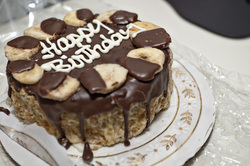
This week, Contra Syncretist celebrates its first birthday! I launched the site a year ago on Friday. 

Here's some of the cool stuff I've learned in that time: 

  1. Not all alternative contras are conducted to mainstream music that you would necessarily find in your local downtown dance club. Eileen Thorsos of Electric Camel fame spins and remixes "electrotrad" music, which focuses heavily on remixes of contemporary bands with a strong traditional/Celtic influence. dJ improper of the DC area mixes contemporary hits with songs by The Who, Kansas, and The Beatles. 
  2. Alternative contras can trace their roots to Lisa Greenleaf's experiments in the last decade, and to some private parties that anecdotally pre-date these. 
  3. There is some debate about whether alternative contras are better staged as outreach events to draw more people into the community, or advanced events to strengthen the shared experience of the existing community. (Feel free to weigh in on this idea over on the Forum.) 
  4. While there are many alternative contra events out there, regular series that are billed as such are comparatively rare. The first predictably-regular one (i.e., "third Tuesdays of the month" type schedule) was the Contra Sonic series near Washington, DC, which started in November 2010. 
  5. In 2011, DJs began to travel around in a way that live bands on the traditional contra scene have for years, injecting more variety into the experience. 
  6. There are hip-hop morris and "Extreme English Country Dancing" (xECD) counterparts to crossover contra, which bring in similar elements. 
  7. The people who are infusing the contra dances with other influences are by and large very much agreed that they do not want to see the acoustic and carried-on tradition go away -- they have differing reasons for looking into electronic music and other genres of music than are typically found in contra, but most will actively say that they wish to build upon the tradition that inspires them, and they see that as what they are doing with their syncretistic art; they do not seek to diminish it in any way, shape, or form. 
  8. Most of the leading techno contra musicians and DJs are men; two notable exceptions are Boston-based piano and accordion player and DJ Julie Vallimont (currently with Firecloud and other incarnations, as well as more traditional bands Nor'easter and La Banane Enchantée) and DJ and caller Eileen Thorsos of the Triangle Country Dancers community in North Carolina, who tours with her remixed "electrotrad" music. 
  9.  Instead of mixing the music to be square and go with the dance, some series write contra dances to specifically go with the alternative tunes.  
  10. Many alternative contras maintain the club atmosphere without strobe lighting effects, much to the relief of some contra dancers who get migraines. 
Thank you to everyone for coming on this journey with me so far! The Friday Flourish will update as usual on Friday and then we will have still more syncretistic goodness to come, and I've got a few ideas up my sleeve for the future! Stay tuned! 
 
 
I first caught up with Jack Mitchell when he called a Contra Sonic installment in 2011. He mentioned that he had danced with Electric Camel Contra and called to dJ improper's sets before, though not with dJ improper himself there, and that he saw some interesting differences between the experiences--at which point I knew I had to talk to him for Contra Syncretist.
 
 
While many people (me included) attend both sorts of events, it is rather patently obvious that techno contras and traditional contras are somewhat different beasts. While there are general differences in ambiance and potentially in audience, the biggest and most obvious difference is the music: traditional contras generally have live bands playing music that either they composed/arranged themselves, or that has been passed down for generations through the folk process. Crossover contras frequently experiment with contra dancing to music that has been both recorded and possibly remixed. While some DJs work completely with their own material, frequently this involves using others’ intellectual property which, if created after 1923, probably has an interested copyright holder behind it.
 
 
It seems that these days North Carolina is a hotbed of crossover contra series, as there appear to be not one but three groups (that I’m aware of -- there may be more!) having events on a fairly regular basis. One of these is Electric Camel Contra, where DJ Eileen Thorsos and her internationally-flavored “electrotrad” music are based.

Eileen herself describes her music as follows: “I focus my DJing on (awesome!) fusion music: traditional tunes played on bagpipes, fiddle, accordion, whistles, etc. and arranged with a lot of beat, electric instrumentation, and other excellent non-traditional arrangements. I've drawn most heavily on the Peatbog Faeries, Shooglenifty, and the Afro Celt Sound System, with important contributions by Martyn Bennett & Martin Low, Enter the Haggis, Urban Trad, Richard Wood, and others....I look for Celtic fusion music that I like (hopefully LOVE), that I want to dance to, and that is upbeat with a rich and interesting sound. I want the dance to be joyous. Many of the sets aren't precisely square the whole way through: They just have to have the potential to be square. I can cut, copy, and paste to make it work out.”