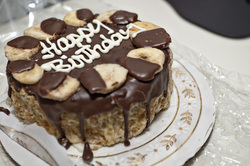
This week, Contra Syncretist celebrates its first birthday! I launched the site a year ago on Friday.
Here's some of the cool stuff I've learned in that time:
Here's some of the cool stuff I've learned in that time:
- Not all alternative contras are conducted to mainstream music that you would necessarily find in your local downtown dance club. Eileen Thorsos of Electric Camel fame spins and remixes "electrotrad" music, which focuses heavily on remixes of contemporary bands with a strong traditional/Celtic influence. dJ improper of the DC area mixes contemporary hits with songs by The Who, Kansas, and The Beatles.
- Alternative contras can trace their roots to Lisa Greenleaf's experiments in the last decade, and to some private parties that anecdotally pre-date these.
- There is some debate about whether alternative contras are better staged as outreach events to draw more people into the community, or advanced events to strengthen the shared experience of the existing community. (Feel free to weigh in on this idea over on the Forum.)
- While there are many alternative contra events out there, regular series that are billed as such are comparatively rare. The first predictably-regular one (i.e., "third Tuesdays of the month" type schedule) was the Contra Sonic series near Washington, DC, which started in November 2010.
- In 2011, DJs began to travel around in a way that live bands on the traditional contra scene have for years, injecting more variety into the experience.
- There are hip-hop morris and "Extreme English Country Dancing" (xECD) counterparts to crossover contra, which bring in similar elements.
- The people who are infusing the contra dances with other influences are by and large very much agreed that they do not want to see the acoustic and carried-on tradition go away -- they have differing reasons for looking into electronic music and other genres of music than are typically found in contra, but most will actively say that they wish to build upon the tradition that inspires them, and they see that as what they are doing with their syncretistic art; they do not seek to diminish it in any way, shape, or form.
- Most of the leading techno contra musicians and DJs are men; two notable exceptions are Boston-based piano and accordion player and DJ Julie Vallimont (currently with Firecloud and other incarnations, as well as more traditional bands Nor'easter and La Banane Enchantée) and DJ and caller Eileen Thorsos of the Triangle Country Dancers community in North Carolina, who tours with her remixed "electrotrad" music.
- Instead of mixing the music to be square and go with the dance, some series write contra dances to specifically go with the alternative tunes.
- Many alternative contras maintain the club atmosphere without strobe lighting effects, much to the relief of some contra dancers who get migraines.
Thank you to everyone for coming on this journey with me so far! The Friday Flourish will update as usual on Friday and then we will have still more syncretistic goodness to come, and I've got a few ideas up my sleeve for the future! Stay tuned!
